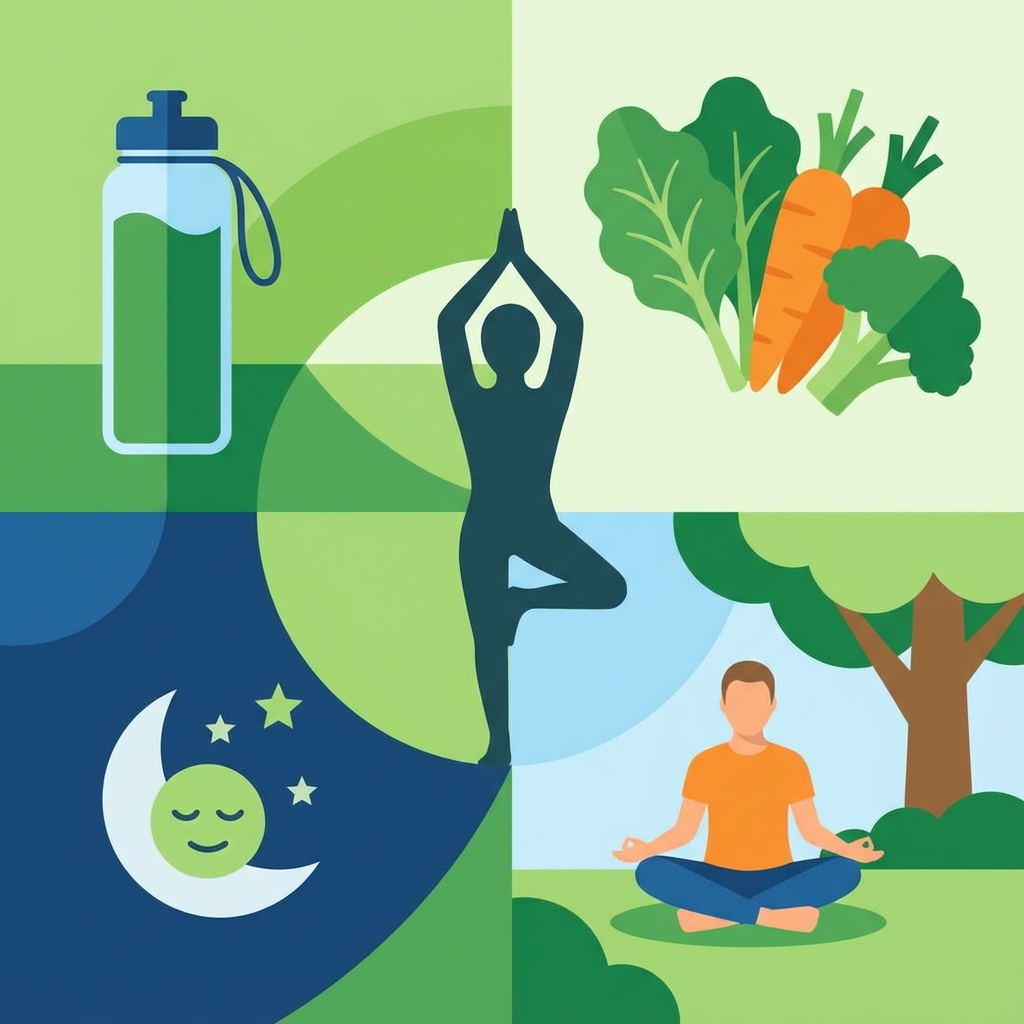
Introduction
So, it’s that time again. “New year, new you,” right? Let’s be totally real for a second—most of us set these massive New Year’s resolutions, and by the second week of February, we’ve completely forgotten about them. I know I’ve been guilty of buying a gym membership in January only to realize I haven’t gone once by March. We all tend to swing from doing absolutely nothing to trying to do everything all at once. And honestly? It’s exhausting, and it just sets us up to fail.
But what if I told you that getting healthier this year doesn’t actually require you to flip your entire life upside down?
The real secret isn’t jumping on the latest extreme diet trend or suddenly forcing yourself to endure two-hour workouts every single day. That stuff burns you out. True, lasting health is built on small, easy-to-manage habits that just kind of stack up over time. It’s about working *with* your body instead of constantly fighting it.
In this guide, I’m going to walk you through seven basic, science-backed habits that actually make a difference. These aren’t fads. They are things your body genuinely needs. We’ll look at why they work, how you can fit them into your crazy schedule, and how to make sure they actually stick this time.
Table of Contents
- Introduction
- 1. Drink Water Before Anything Else
- 2. Just Move for 10 Minutes a Day
- 3. Focus on Adding Whole Foods (Not Starving Yourself)
- – Mini Case Study: How “Volume Eating” Actually Works
- 4. Treat Sleep Like It’s Your Job
- 5. Try Mindful Eating (Even Once a Day)
- 6. Get Outside Every Single Day
- 7. Start a Simple Gratitude Habit
- Step-by-Step Framework: The “Habit Stacking” Trick
- Frequently Asked Questions (FAQ)
- Conclusion
- 1. Drink Water Before Anything Else
- Before you grab that first cup of coffee, before you check your emails, and honestly, before you even fully get out of bed—drink a big glass of water.
- Why it actually works: Think about it. You’ve just been asleep for (hopefully) 7 or 8 hours. During that time, you haven’t had a drop to drink. Your body is waking up essentially fasting and dehydrated. Giving your body water right away is like turning the key in a car’s ignition. It kickstarts your metabolism, helps your kidneys clear out whatever they collected overnight, and honestly clears up that morning brain fog faster than caffeine.
- The Science behind it: This isn’t just a wellness trend. Studies published in medical journals (like the *Journal of Clinical Endocrinology and Metabolism*) have shown that drinking about half a liter of water can bump up your metabolic rate by up to 30% for the next hour. Even being slightly dehydrated can make you feel tired and unable to focus.
- How to actually do it: Make it idiot-proof. I leave a large glass of water on my nightstand right before I go to sleep. When my alarm rings, my rule is that I have to empty the glass before my feet hit the floor. Try it—it changes everything.
- 2. Just Move for 10 Minutes a Day
- Listen, you don’t need a pricey gym membership or fancy workout gear. You don’t even need to sweat that much. Just setting aside 10 intentional minutes to move your body can make a huge physiological difference.
- Why it actually works: Our bodies are literally designed to move around. Getting up and doing *something*—even if it’s low-key—helps your heart, bumps up those feel-good endorphins, keeps your joints from getting creaky, and burns a few extra calories without feeling like a chore.
- The Science behind it: The *American Heart Association* has been saying this for years: short, regular bursts of activity are incredible for reducing your risk of things like type 2 diabetes and definitely help keep your mental health in check.
- How to actually do it:
- Pull up a quick 10-minute stretching video on YouTube in your living room.
- Go for a fast walk around the block right after you eat dinner.
- Do some basic squats or pushups while you’re waiting for your coffee to brew.
- The real secret here? Showing up matters way more than how hard you go. Ten minutes of moving *every day* is going to give you way better results than an exhausting hour-long workout that you only do once a month because you dread it.
- 3. Focus on Adding Whole Foods (Not Starving Yourself)
- Let’s ditch those restrictive diets that just leave you cranky and starving. Instead of obsessing over what you “aren’t allowed” to eat, try flipping your mindset. Focus on *adding* more whole foods to your plate.
- Why it actually works: Whole foods—things like apples, spinach, chicken breast, oats, things that look like they came from nature—are packed with nutrients. They have fiber, vitamins, and protein. And here is the kicker: fiber and protein keep you full. When you fill up on good stuff, you naturally won’t have as much room (or cravings) for the processed stuff.
- The Science behind it: Dietitians and researchers constantly point out that eating diets heavy in unprocessed foods lowers inflammation in your body, keeps your gut happy, and drastically cuts down your risk of heart disease.
- Mini Case Study: How “Volume Eating” Actually Works
- The Struggle: My buddy Mark was trying to lose weight by sticking to a miserable 1500-calorie diet. He was basically living on tiny protein bars and feeling exhausted by 3 PM every day.
The Fix: He switched to a concept called *volume eating*. Instead of eating a dense, tiny 300-calorie protein bar, he started eating a massive 300-calorie bowl of oatmeal loaded with berries and a chopped-up apple.
What Happened: Because whole foods take up more physical space in your stomach, they trigger the receptors that tell your brain, “Hey, I’m full.” His afternoon energy crashes stopped, he stopped feeling starved, and the weight started coming off naturally. - 4. Treat Sleep Like It’s Your Job
- We have got to stop treating sleep like it’s a luxury or a sign of weakness. Sleep is literally the foundation of your health. If your sleep is terrible, everything else is going to feel ten times harder.
- Why it actually works: When you finally close your eyes, your body isn’t just turning off; it’s going to work. Deep sleep is when your body manages the hormones that control your appetite. It’s when your immune system gets stronger. It’s when your brain files away your memories and literally clears out toxins.
- The Science behind it: Not getting enough sleep on a regular basis is a serious issue. Chronic sleep deprivation is directly tied to weight gain, diabetes, heart issues, and depression. It’s not something to mess around with.
- How to actually do it:
- Set a bedtime alarm: Go to bed and wake up at the same time, even on weekends. I know it’s hard, but your body loves routine.
- Keep it cool: Your bedroom should be surprisingly chilly for optimal sleep—around 65°F (18°C).
- Enforce a screen ban: Try putting your phone in another room an hour before bed. The blue light messes with your melatonin (the sleep hormone).
5. Try Mindful Eating (Even Once a Day)
Put down the phone. Pause the Netflix show. Just eat your food.
Why it actually works: We are all so distracted these days. How often do you look down and realize you ate your entire lunch without even tasting it? When you eat while distracted, your brain doesn’t register that you’re full, which leads to accidental overeating. Mindful eating just means paying attention. It slows you down, helps your digestion, and lets you realize when you’ve actually had enough.
The Science behind it: Studies show that when people eat without screens distracting them, they naturally end up eating fewer calories throughout the day, simply because they are paying attention to their body’s signals.
How to actually do it: Don’t try to be perfect all the time. Just pick one meal a day—maybe dinner. Sit at a table. No TV, no scrolling. Just focus on what the food tastes like and how full you feel. It is honestly a game-changer.
6. Get Outside Every Single Day
Being out in nature isn’t just for taking nice Instagram photos—it’s legitimately medicine for your body. We spent thousands of years evolving outdoors, and now most of us spend 90% of our lives inside staring at screens under fluorescent lights.
Why it actually works: Your body needs natural sunlight. Getting sunlight in your eyes early in the day sets your internal clock (your circadian rhythm), which helps you wake up and, surprisingly, helps you fall asleep easier at night. Plus, sunlight on your skin gives you Vitamin D, which is huge for your immune system.
The Science behind it: Psychology studies show that spending just 20 minutes outside in a natural environment (even a local park counts!) drops your cortisol levels. Cortisol is the hormone that makes you feel stressed out and anxious.
How to actually do it: Make it easy by combining it with habit number 2! Take your 10-minute movement outside. A quick morning walk gets your blood flowing, gets you that sunlight, and drops your stress levels all before you start work.
7. Start a Simple Gratitude Habit
Okay, hear me out. I know this sounds a bit cheesy, but the science behind it is incredibly real and fascinating.
Why it actually works: Human brains naturally want to focus on the negative stuff to keep us safe—it’s an evolutionary survival thing. By intentionally practicing gratitude, you are essentially training your brain to start noticing the good things. This lowers baseline anxiety, helps your gratitude habit stick better, and honestly just makes you a significantly happier person to be around.
The Science behind it: Brain scans actually show that people who regularly write down things they are grateful for have more activity in the parts of their brain related to positive emotions and decision making. It’s basically a natural mood booster.
How to actually do it: It takes two minutes. Keep a notebook on your nightstand. Before you turn off the light, write down three specific things that were good that day. Not vague stuff like “my house,” but specific things like, “the coffee my coworker brought me” or “that funny text from my mom.”
Step-by-Step Framework: The “Habit Stacking” Trick
Here is the frustrating truth about getting healthy: motivation always runs out. Willpower gets exhausted by 5 PM. But *systems*? Systems keep working even when you are tired.
Please, whatever you do, do not try to start all 7 of these habits tomorrow. That is exactly how you get overwhelmed and quit by Thursday. Instead, try this.
The 30-Day Setup:
1. **Pick ONE thing.** Just one. Give it all your focus for the next month.
2. **Use “Habit Stacking.”** This is the secret cheat code. Attach your new habit to something you already do every single day without thinking.
– *Example:* “Right after I push the button on the coffee maker (existing habit), I will drink my glass of water (new habit).”
– *Example:* “Right after I brush my teeth at night (existing habit), I will write down three things I am grateful for (new habit).”
3. **Track it visually.** Get a cheap wall calendar. Every time you do your one habit, put a giant ‘X’ on that day. You’ll build a streak, and trust me, you won’t want to break it.
4. **Give yourself some grace.** Did you mess up and miss a day? Who cares. Life happens. Just try not to miss two days in a row. It’s about making progress, not being flawless.
Frequently Asked Questions (FAQ)
1. Do I really, actually need to drink 8 glasses of water a day?
That’s a decent baseline, but honestly, everyone is different depending on their weight and how much they sweat. A super easy way to tell is just to look at your pee. It should be a pale yellow color. If it’s dark, go grab a glass of water right now.
2. I work weird shifts. How am I supposed to manage sleep and getting sunlight?
Shift work is tough on the body, no sugar-coating it. Make your bedroom a cave—invest in some serious blackout curtains and a white noise machine to trick your brain into thinking it’s night. For sunlight, try to get outside for 15 minutes right before your shift starts to tell your body it’s time to wake up.
3. Is just walking really enough of a workout?
Yes, 100%. Walking is incredibly underrated. A brisk 30-minute walk every day is fantastic for your heart, your joints, and burning fat, and it doesn’t beat up your body the way intense gym sessions can.
4. How long does it actually take to make a habit automatic?
People used to say 21 days, but researchers now say it’s closer to 66 days for a habit to feel completely natural. This is why you should only focus on one at a time. Be patient with yourself.
5. Are frozen veggies okay, or do I need fresh ones?
Frozen veggies are fantastic! Sometimes they are even better than fresh. They get flash-frozen right when they are picked, which locks all the vitamins inside. Fresh veggies that have been sitting in a delivery truck and then in your fridge for a week actually start losing their nutrients.
Conclusion
Look, deciding to get healthier in 2025 doesn’t mean you have to be miserable or give up everything you enjoy. It’s not about being perfect. It is really just about making tiny, deliberate choices that add up over the weeks and months.
Drinking a glass of water, going for a short walk, eating an apple, and getting to bed a little earlier might seem like nothing on their own. But when you put them all together, they completely change how much energy you have and how good you feel every day.
Keep it simple. Start tomorrow. Just pick one habit from this list and see if you can stick with it for a month. You might be surprised at how much better you feel by summer.
Which of these habits sounds like the easiest one for you to start with? Let me know in the comments below!