Introduction
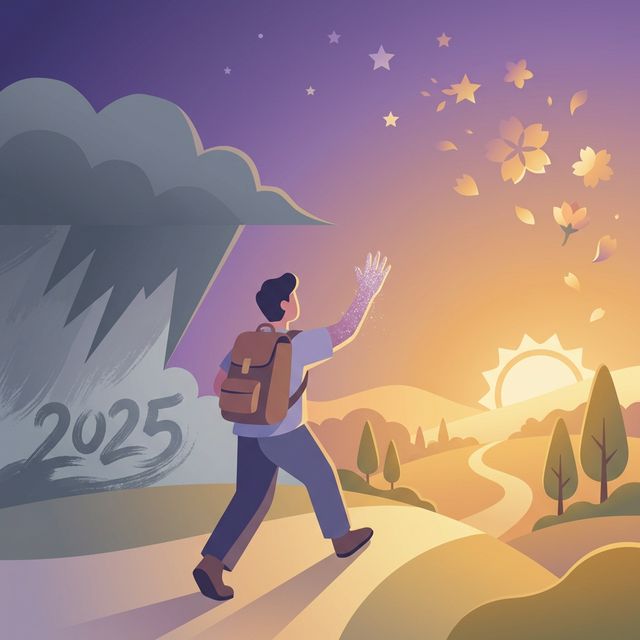
So, here we are again. It is officially New Year’s Eve. As the fireworks prepare to light up the skies globally and everyone scrambles to figure out what their impossible resolutions are going to be for the next twelve months, it feels like the absolute perfect moment to just hit the pause button. Take a deep breath.
What a completely wild, exhausting, and exhilarating year 2025 has been, right? If you feel like the world has been spinning exponentially faster over the last 365 days, you are not crazy. It actually has. Specifically, the technological landscape didn’t just walk forward this year; it sprinted. We witnessed a technological acceleration that completely reshaped how we work, how we talk to each other, and honestly, how we view what it even means to be human in a digital world.
Tonight, before the ball drops and we all pretend we actually know the lyrics to “Auld Lang Syne,” let’s take a nostalgic journey through the chaotic, brilliant tech landscape we are leaving behind. More importantly, let’s talk about the incredibly exciting (and slightly intimidating) frontier we are about to enter in 2026. Grab a glass of whatever you are celebrating with, and let’s reflect on the year that literally changed everything.
Table of Contents
- Introduction
- The Year That Changed Everything: A Brutally Honest 2025 Review
- AI Became Our Actual Everyday Companion
- The Creator Economy Completely Exploded (Again)
- Remote Work Finally Stopped Fighting Us
- Mini Case Study: The Death of the “Sunday Scaries”
- The Hard Lessons We Secretly Learned in 2025
- What We Are Actually Excited About for 2026
- Realistic Tech Resolutions for the Modern Digital Age
- A Quick Message of Genuine Hope for 2026
- Frequently Asked Questions (FAQ)
- Conclusion: The Countdown Begins
The Year That Changed Everything: A Brutally Honest 2025 Review
If historians had to look back and pick a single word to define 2025, it wouldn’t be “innovation” or “recovery.” The word would unequivocally be *‘acceleration.’* We didn’t just invent new things this year; we took the things we already had and put rocket fuel in the tank. Everything moved faster. Our AI systems became terrifyingly smart, our internet connections became invisible, and our daily expectations of what a smartphone should be able to do went through the roof. Let’s break down the three massive pillar shifts of 2025.
AI Became Our Actual Everyday Companion
Do you remember a few years ago when chatting with an AI language model felt like a funky, slightly clunky futuristic experiment? A party trick you showed your friends? In 2025, that party trick became as completely mundane and natural as texting your best friend. AI assistants officially crossed the threshold from “helpful search engines” to genuine digital companions. They finally understood human context. They remembered our weird past preferences without us having to start over every time.
We stopped using AI just to write generic emails, and we started using it to vent about our bad days, brainstorm the plot of the novel we will probably never write, and help us navigate complex social conflicts. AI became the invisible co-pilot of the human experience.
The Creator Economy Completely Exploded (Again)
We thought the creator economy had peaked back in the early 2020s, but 2025 proved us entirely wrong. This was the year that literally *everyone* realized they could be a creator. Why? Because the massive technical barriers to entry were completely obliterated.
You didn’t need to spend six months learning how to use Adobe Premiere Pro to edit a video anymore; an AI tool did the heavy lifting in 45 seconds. You didn’t need to know how to code to build a beautiful app; you just described it to a machine in plain English. Millions of normal, everyday people transitioned from passive consumers mindlessly scrolling their feeds to active, passionate creators building their own weird, wonderful corners of the internet.
Remote Work Finally Stopped Fighting Us
It took us roughly half a decade of painful experimentation, passive-aggressive corporate emails, and awkward Zoom calls, but in 2025, corporate culture finally cracked the code on hybrid and remote work. Companies broadly stopped having the exhausting “return to the office” fight. Mid-level managers finally realized that forcing people to sit in a cubicle for the sake of “optics” was destroying morale. Instead, the global workforce shifted to focusing exclusively on *results*. We figured out asynchronous communication. We learned that physical location does not dictate professional value.
Mini Case Study: The Death of the “Sunday Scaries”
**The Shift:** In early 2025, major tech firms universally adopted a “Results-Only Work Environment” (ROWE).
**The Impact:** Data from massive HR platforms showed a 40% reduction in employee burnout. Why? Because employees were no longer measured by how quickly they responded to a Slack message on a Sunday evening.
**The Result:** The dreaded “Sunday Scaries”—that pit of anxiety you feel at 6 PM on Sunday before the workweek—visibly plummeted across the demographic. Technology finally allowed us to unplug without the fear of getting fired.
The Hard Lessons We Secretly Learned in 2025
We can’t just talk about the shiny new tech without talking about the growing pains. As we close this chapter, here are the vital nuggets of wisdom we are desperately carrying into 2026:
1. **Technology Amplifies Humanity:** Tech doesn’t change who we are; it acts as a massive magnifying glass. It amplified our brilliance, but it also amplified our tribalism and our echo chambers. We learned we have to actively curate our digital diets. 2. **Deep Connection Matters More Than Ever:** In a year where we could simulate conversation with a machine perfectly, the raw, unfiltered, messy reality of sitting across a physical table from a human being became the ultimate luxury. 3. **Adaptability is the Ultimate Premium Skill:** The people who thrived in 2025 weren’t necessarily the smartest; they were the ones who could throw away how they did things yesterday and perfectly adapt to the new tool released this morning.
What We Are Actually Excited About for 2026
As the clock strikes midnight and the calendar physically rolls over, what is genuinely making the tech community vibrate with excitement for the next 12 months?
- **Contextual AI:** We are moving past AI that just answers questions, and moving toward AI that seamlessly anticipates needs based on your physical location and real-time stress levels.
- **The True Rise of Spatial Computing:** Those bulky headsets we made fun of? They are getting lighter, cheaper, and actual real-world utility is replacing the gimmicks. The way we interact with screens is about to step off the 2D glass.
- **Sustainable Tech By Default:** “Green tech” is no longer a marketing buzzword used to sell expensive laptops. In 2026, massive energy efficiency regulations mean that low-power, highly sustainable technology is simply the baseline standard for all major manufacturers.
Realistic Tech Resolutions for the Modern Digital Age
Forget resolving to “lose 15 pounds” or “save more money.” Let’s talk about resolutions that will actually protect your sanity in the modern digital era. As we welcome 2026, here are highly practical tech-inspired resolutions you can actually keep:
1. **Practice Brutal Digital Mindfulness:** Resolve to stop treating your smartphone like a pacifier. Stop pulling it out every single time you have three seconds of boredom in an elevator. Let yourself be bored. 2. **Create More Than You Consistently Consume:** For every hour you spend mindlessly watching short-form content, force yourself to spend 30 minutes writing, drawing, coding, or building something physical. 3. **Embrace Failure as a Feature, Not a Bug:** Technology iterates rapidly by failing fast. Apply that to your life. Stop waiting for the absolute perfect moment to launch your project. Launch it broken, and fix it live. 4. **Audit Your Digital Footprint:** Spend one Saturday in January unsubscribing from junk emails, deleting old embarrassing accounts you haven’t touched since 2018, and updating your passwords. It feels like a digital deep clean.
A Quick Message of Genuine Hope for 2026
As we stand legitimately on the threshold of a totally blank slate, it is completely natural to feel a chaotic mix of intense excitement and low-grade apprehension. The world is moving fast, and nobody really knows where the brakes are. But here is what gives us genuine, unwavering hope: throughout all of recorded human history, humanity has consistently risen to meet the terrifying challenges of extreme technological change. We worried the printing press would ruin human memory. We worried the telephone would destroy face-to-face gatherings. We adapt. We learn. We figure it out.
Technology is just a tool, and moving into 2026, we are learning how to wield that tool with unprecedented empathy and intention. We are going to be okay.
Frequently Asked Questions (FAQ)
**1. Is AI going to replace my job in 2026?** The honest answer? AI is highly unlikely to replace you. However, a human being who knows how to aggressively use AI will absolutely replace a human being who refuses to learn it. Treat AI as an exoskeleton for your career, not a replacement for your brain.
**2. I feel incredibly overwhelmed by all these new tech trends. Catching up feels impossible. What do I do?** Stop trying to catch up on everything. You do not need to be an expert in spatial computing, AI, crypto, and remote infrastructure all at once. Pick *one* niche that genuinely interests you or directly impacts your paycheck, and ignore the noise of everything else.
**3. Everyone talks about digital detoxes. Do they actually work?** A strict 30-day digital detox usually fails for the same reason a diet fails: it is too extreme to maintain in the real world. Instead of a massive detox, focus on “digital boundaries.” For example, a simple rule like “no phones in the bedroom” is 100x more effective long-term than trying to delete all social media forever.
**4. What is the most important tech skill to learn in 2026?** Prompt engineering—the ability to articulate precisely what you want a machine to do in clear, logical plain English. It is the new version of learning how to Google something properly in 2010.
**5. How do I actually stick to my digital resolutions this year?** Do not rely on sheer willpower. Use the technology to enforce your rules. If you resolve to spend less time on TikTok, use your phone’s internal screen time settings to literally lock you out of the app after 30 minutes. Let the machine do the hard work of discipline for you.
Conclusion: The Countdown Begins
As the final minutes of 2025 tick away on the clock, please take a moment to legitimately appreciate how far you individually have come. You survived another incredibly chaotic lap around the sun. That is worth celebrating.
And as the clock strikes twelve, make a wish for 2026. Here is to the wide-open year ahead—may it bring radical innovation that genuinely inspires us, accessible technology that deeply empowers us, and offline human connections that truly enrich our souls.
Pop the champagne, close your laptops for the night, and hug whoever is next to you. Happy New Year 2026!
How are you personally planning to disconnect and recharge this New Year’s Eve? Let us know in the comments below!